Iola Hamilton Bailey

Iola married Larkin A Bailey in 1903 and they are the parents of 12 children.
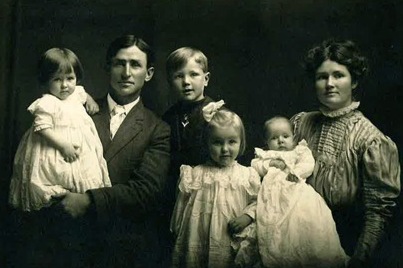
Flora, Lark, Edd, Pauline, Lydetta and Iola Bailey
Before moving to Colorado about 1909
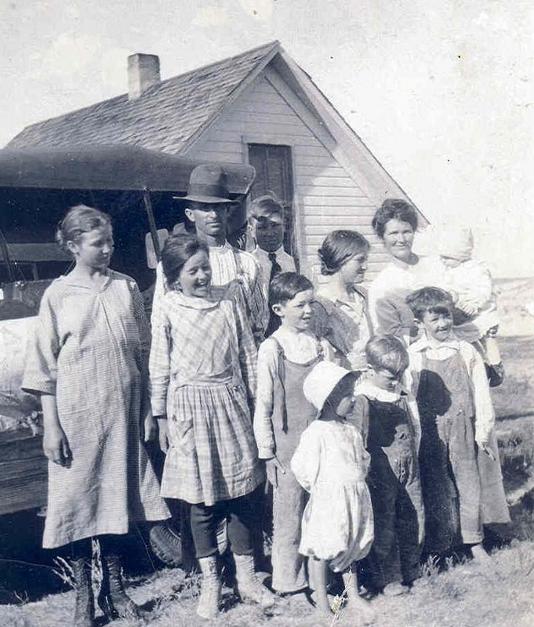
Lark and Iola Bailey and family at their home in Keota in 1922.
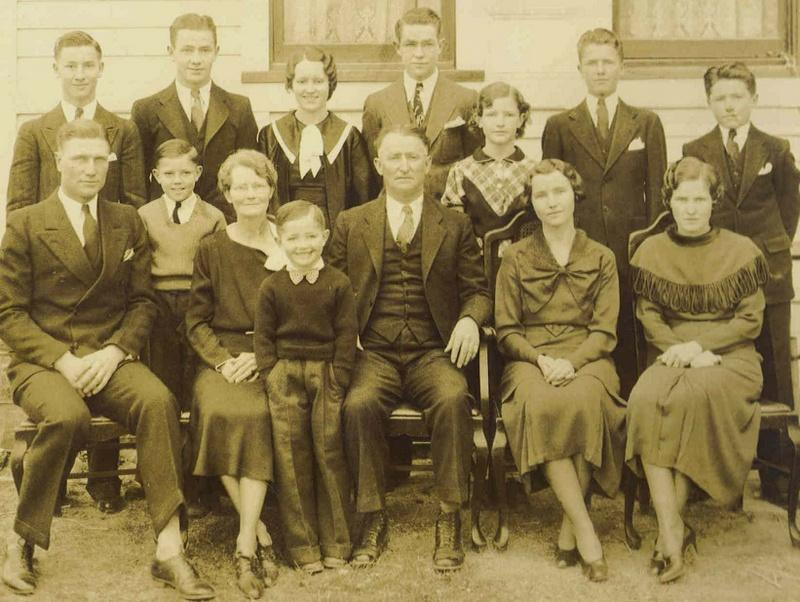
The Bailey Family
James, Ellis, Lydetta, Weldon, Helen, Bert and Russell
Edd, Delmore, Iola, Gene, Lark, Pauline, Flora
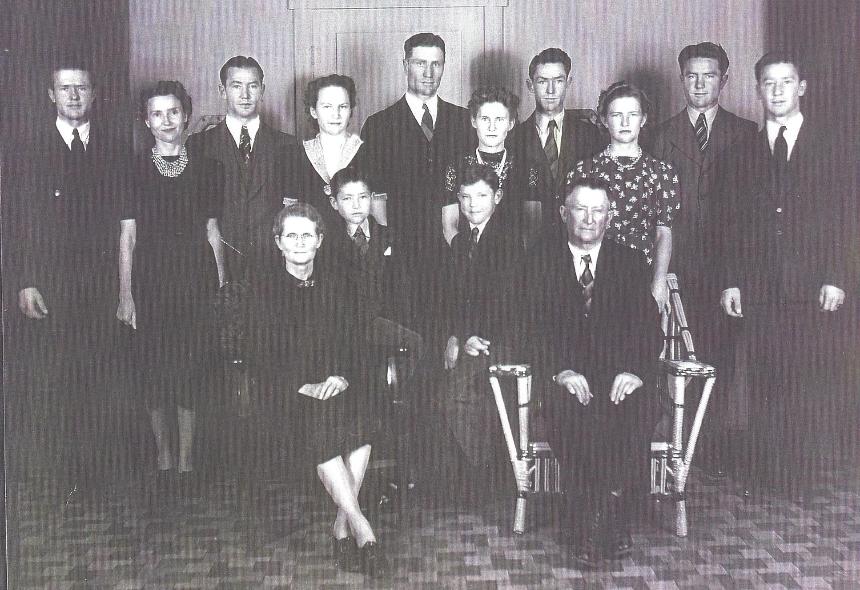
Iola and Lark Bailey and Family in 1934
Bert, Pauline, Ellis, Lydetta, Edd, Flora, Weldon, Helen, Russell, James
Iola, Eugene, Delmore, Lark
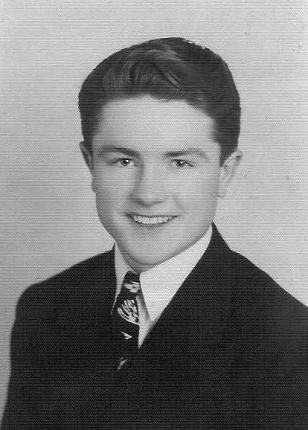
Russell Leroy Bailey was born in 1920. He married Teddy Ann Storey in 1943.
Russell was killed in WWII in France on June 15, 1944. His son Russell was born on December 15, 1944.
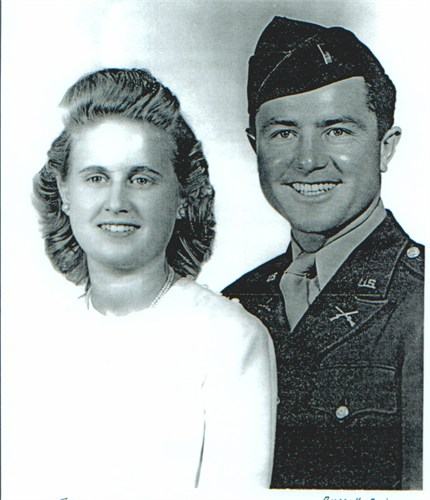
Teresa Ann and Russell Bailey
Teddy Ann Storey was Miss Frontier in 1942.
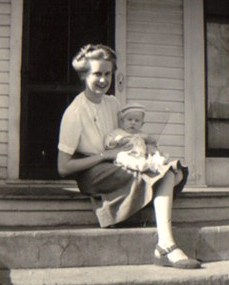
Teddy Ann and baby Russell
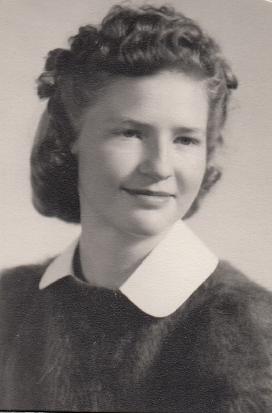
Helen Bailey Hollis
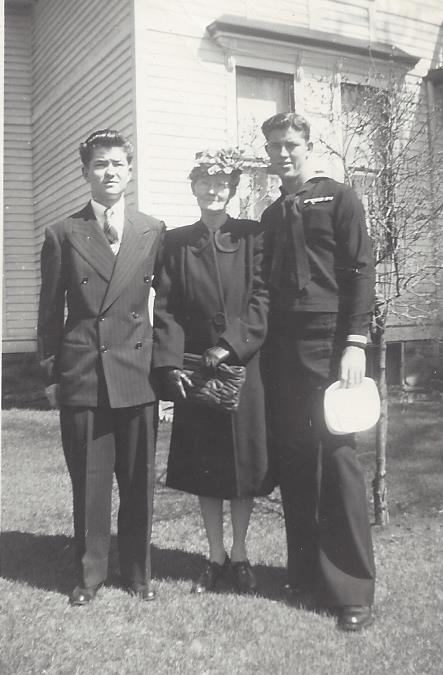
Gene, Iola and Delmore Bailey

Flora Bailey

Lydetta Bailey
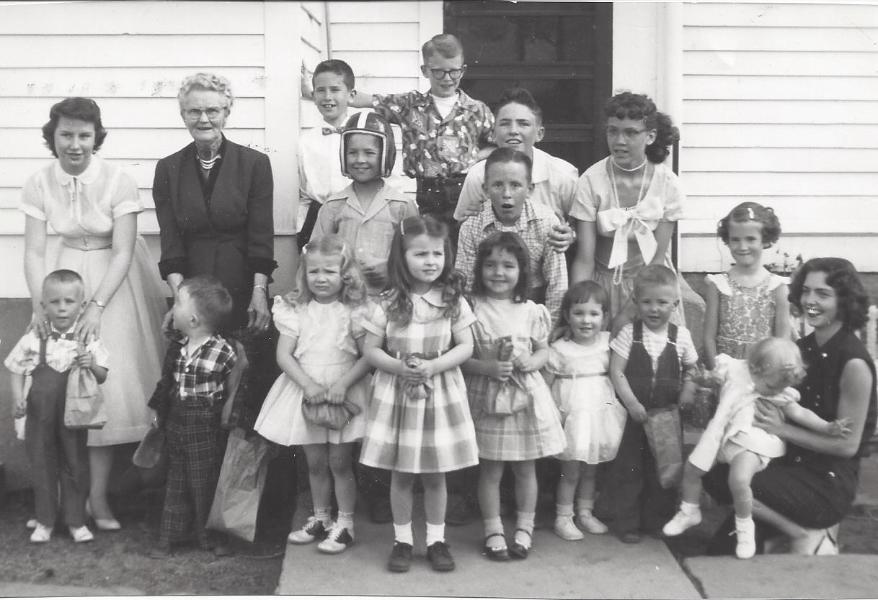
Iola Bailey and her Grandchildren
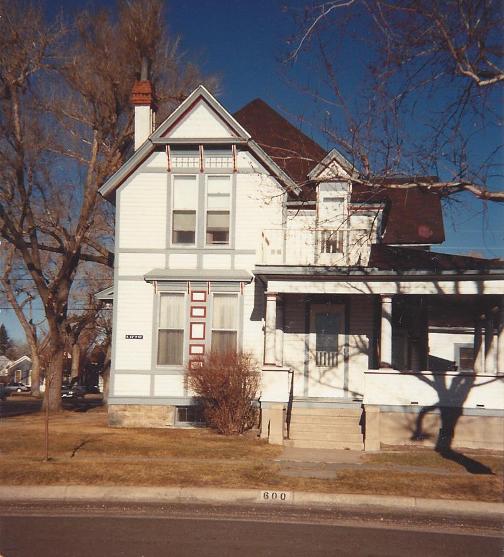
600 E 17 Street
Cheyenne Wyoming
My Memories of 600 East 17th Street,
Home of Larkin and Iola Bailey
By Laura Mae Bailey
I was one of the many to experience Iola and Larkinʼs shelter during
various length of stays - from dropping in for lunch or dinner or, on two
occasions, to actually live with them.
I was made to feel special because of being their oldest
granddaughter. After several grandsons (my brother Hugh, cousins Richard
and Bill Sinclair), I was the first and only girl. But, then, happily, Diane
Oswald arrived to join our group of cousins. That group grew much larger
as the years went on.
My parents were Edd Hamilton Bailey and Mabel Parker Bailey. From
when I was a baby in 1931 until I graduated from Cheyenne High School in
1949, we moved to towns all along the Union Pacific right away from
Omaha to Green River and Salt Lake to Denver. Some places we lived
twice, so our homes changed often. But, the one thing we could always
count on, was the feeling of being at home at Grandma and Grandpa
Baileyʼs house when we could be in Cheyenne.
We especially tried to be there at Christmas time for Christmas eve.
There was nothing else like it! It was so much fun being with cousins to
share the anticipation of Santaʼs arrival. All of the cousins would wait and
play on the staircase in the front hallway. Part of the joy of the evening, was
gathering the around the piano to sing together.
I think the first time I lived there was when I was in junior high.
Mother and I stayed in the upstairs back bedroom at Grandmaʼs house so
that I could finish out the year of school before we joined Dad in the new
location.
The second time was in 1948, and my senior year in high school. Dad
had been transferred to Denver. He and Mother knew how important it was
to me to graduate with my class, so, with grandmaʼs consent, it was
agreed that I could stay with her. I was then in the upstairs side bedroom.
Staying there was so much fun. The dates run together in memory,
but the same beloved people are present; Aunt Helen and Uncles Genes,
and Delmore, Cousins Bill and Richard, Aunts Flora and Lydetta and,
of course, Grandma and Grandpa.
It was a bee hive of activity. I so well remember the laughter between
Helen, Flora and Lydetta as they worked at Grandmaʼs sewing machine in the
dining room. Said room was located in the center of the house and one
would walk through it from the front hallway to the downstairs bathroom,
the kitchen and the side living room. Uncle Gene taught me the Lindy in that
room and Grandpa took his after-work naps there.
Grandma and Grandpa set the tone for table conversations. Often
there would be many of their sons, daughters, grandchildren and in- laws
around the large dining room table in various combinations. The arguments
would range from politcs to which car was best...the Ford or Chevy.
Opinions abounded! But the underlying constant was the abiding good
humor and love within the walls at 600 East 17th St.
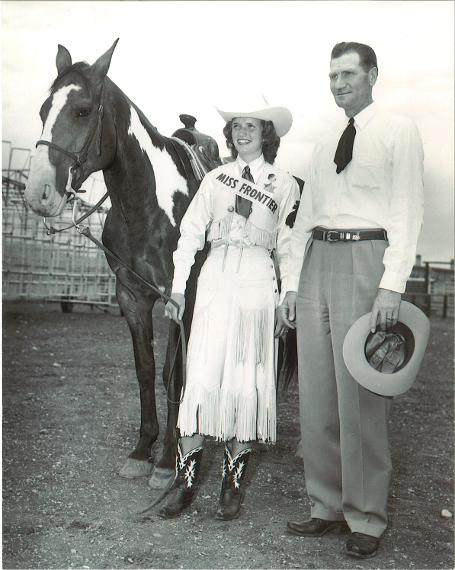
Edd Bailey with his daughter Laura when she was Miss Frontier in 1952
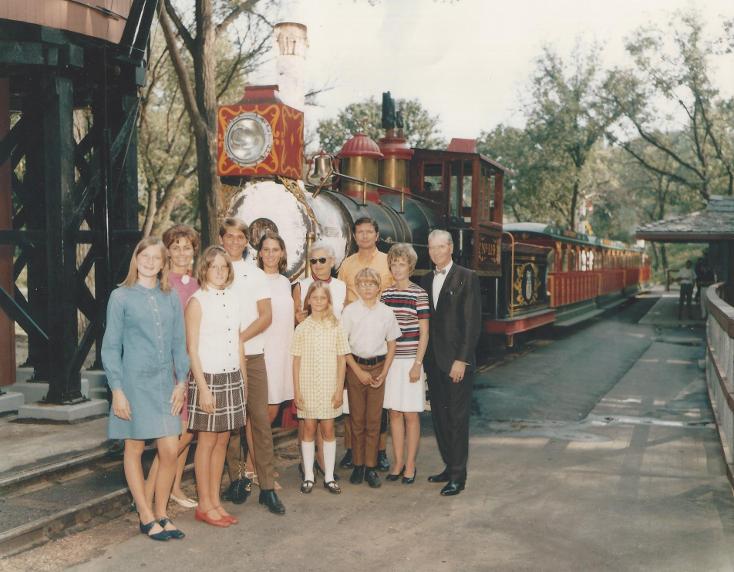
Edd Bailey and family at the Zoo in Omaha in 1969
Pamela Richardson, Charmaine Bailey, Laurie Jo Richardson, Tim Bailey, Ann Bailey, Mabel Bailey, Bridget Bailey, Wade Bailey, Hugh Bailey, Laura Bailey Richardson and Edd Bailey
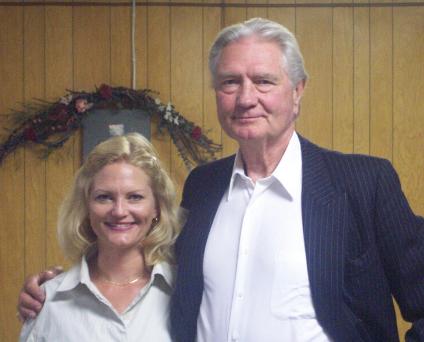
Hugh and Bridget Bailey Yarbrough at the 2001 Hamilton Reunion.
Hugh Bailey is Edd's son and Bridget is Hugh's daughter.
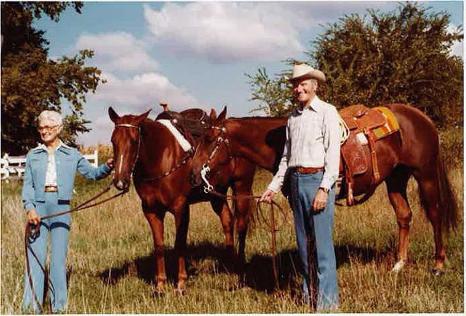
Mabel and Edd Bailey in 1950
Edd Bailey loved horses and to be on his ranch.
Iola and Lark Bailey's son, Edd Bailey began working for the Union Pacific Railroad in 1922 on a temporary basis for $8.82 a day as a car man helper. In 1965 he became President of the Union Pacific Railroad.
Read the page "Our Family and the Union Pacific"
Memoirs from Edd Bailey
I arrived on September 13, 1904, on the farm of my Hamilton grandparents about 2 miles from Elmo, Mo. The first that I can recall, we were living on a farm about ¾ mile from the Hamilton farm. Needless to say we made many trips over to see them and my aunts and uncles. I enjoyed them very much then and over these many years. I remember grandmother better than grandfather, suppose that was because she was always there and he was gone a lot. The uncles were old enough to do the farm work, and he was quite a trader as I understand it. He had the children from his first marriage to keep in touch with. I remember when he came to visit the Scotts and us in Colorado.
Grandmother Hamilton was a small person, very prim and polite. She always sat erect and on the edge of the chair. She was not the gussy type, most sincere, and very kind and gentle. Seemed to me that she was always busy cooking or sewing.
By the time we left Missouri in the spring of 1910, Pauline and I were regular customers at our Hamilton grandparents. There was always something exciting to do, like going hunting for squirrels or pigeons and rabbits. Before we left for Colorado I was sure Uncle Fowler, Ed or Frank could out shoot anyone. They could spot a rabbit or a squirrel who thought they were hidden. And more that, they would usually hit them. Uncle Art, Aunt Thale and Aunt Edith were not too much older than I. As I recall, their job was to see that I didn’t get into trouble while playing outside.
I was about 4 years old when good old Santa brought us a shinning red wagon, sister Pauline was about two. We spent much of our time going to see our grandparents, uncles and aunts. The road I well remember was most of the time very rough. It was cut up by wagon wheels after a rain. It was so bad that Pauline preferred walking. Many an occasion grandmother would say, you must stay for dinner. We will have squirrel or pigeon pie. I don't how she knew our staying would be OK with mother. I am not sure they had a phone or advance understanding.
I think this pretty much covers what I can recall before leaving for Colorado. We were very excited when Dad and Uncle Ernest returned from their trip out west and said we were moving to Colorado. I remember the getting ready to load the immigrant cars, which contained farm machinery, household goods, live stock. Our car had a large team of mules and four or five red short horn milk cows. In one end there was a large bin of yellow shelled corn. Taking this corn was a great idea, as it was several years before we were able to grow crops on the new fields and build fence to protect it from range cattle.
Dad and Uncle Ernest left Elmo ahead of us in order to have our belongings moved into the place that grandfather had bought. It was located about 4 miles east of Sligo. The house was fair sized, small barn. It had the best hand dug well. There was no pump, water was brought up with a bucket on a rope, powered by a windless. I was always afraid Pauline or Esther would fall in. The well was covered with a plank, but necessary to lay some of them aside for the bucket to pass through. They wanted to see.
When the families arrived in Sligo, it was early spring of 1910. Dad and Uncle Ernest met us driving our team of mules hitched to a lumber wagon. We were glad to see them and anxious to see where we would live while our homes were being built. As I remember the construction gang was Dad, Uncle Ernest and Uncle Ed.
The old Dryland as it was referred to over the years, looks very much today as it did when we arrived. Most of the homesteaders buildings are gone. A large amount of the land in our part was bought up as a large sheep ranch. There is no farming and Buffalo grass etc. has taken over.
The only fence between our place and Sligo was around a school section that joined our place on the north. This would be eight miles from Sligo. This fence had old railroad ties as posts and was used by cattlemen to rest their cattle. It also had a small lake and springs. The cattle were still being driven in large herds from Texas. Some of the herds were steers and others were cows ready to calf. The latter would use this spot to have their calves. From here the cattle were driven northwest to summer range which was located near Pine Bluff, WY. This station is on the N.P.R.R. and was used as shipping point to markets. It took a while for the homesteaders Bailey & Scott to convince the cattlemen that we had come there to stay. The cattle drives were discontinued after 2 or 3 years as so much of the land was taken up and fenced by the newcomers.
I can not recall how long it took to finish the homes, but am quite sure we moved into them in early fall. They were both the same size, 18’ x 24’, two stories high (and a good thing for us it was as the family grew) There were two rooms upstairs, and down. The chimney was about two feet square in the center of the house, a range with hot water reservoir on the side. This unit was the only heat in the house. It did quite well, burning coal as fuel when we had money, but cow chips were plentiful and was the main fuel. One year I recall we burned snapped corn as it was cheap, only 10 cents a bushel. During the summer and fall we soon found it wise to use a pitchfork to gather the chips as there were many rattlesnakes.
Each fall and early winter Dad would be gone several months working in a sugar beet factory, Loveland, Greeley, Berthod or Ft. Morgan, Co. About the only income we had was from the four milk cows we brought from Missouri. Dad did barber work in Keota two or three days a week, on good days he would make $5-7.00. He would empty his pocketbook on the table and count it out. It was mostly nickels, dimes and quarters. It was after dark by the time he would arrive home. We were eight miles from Keota and glad to see him.
When Dad was away working in the factory, mother and I worked as a team taking care of the livestock. Dad had built a barn out of rocks taken from an outcrop about 1 mile from our home. It was white and came out in layers of good size, 2" to 3" thick. He would shape them by using a heavy hammer. The barn was large enough to hold the cattle and mules and a good space for storage of hay. This barn was located in a 4 or 5 acre lot and it was a must that we had the cattle and mules in the lot before dark. Of course they needed to be inside the barn when winter storms showed up.
Mother was so remarkable and fun to work with. While we were outside working, Pauline was watching out for Flora and Lydetta. We called them the little girls and then later on there were the little boys. That was Weldon & Ellis. Then later on there was James & Bert. We just used their regular names.
While on the family farm I think I should point out some of the conditions that confronted the early settlers. There were few doctors and no hospitals short of Greeley or Cheyenne. Brother Weldon was the first addition to our family after moving to Colorado. You can imagine my coming downstairs that morning, May 3, 1912, and being advised of his arrival. Also I was at a loss to know why our neighbor lady, who lived about 4 miles north of us, was present. Dad had gone after her during the night, no doubt at mother’s request. Mrs. More was on steady from then on as midwife for Ellis, James, Bert and Russell. Starting with Ellis it was my job to go after her, always at night. We used horse and buggy for Ellis and James, a model T Ford for Bert and Russell. I was surprised how well a horse could follow the trail in the dark. The lights on the Ford were not much better than they were on the horse and buggy arrangement. I was 10 years old when I started this job. Sister Helen, brothers Delmore and Gene were born in Cheyenne. The rest of us referred to them as the city kids.
Grandmother and her family were always sending boxes of clothing, mostly hand-me-downs and things they had made. Sometimes there were high top button ladies shoes. I think some of the clothing and perhaps the shoes came from one or two aunts, who lived and worked in either New Jersey or New York.
I wasn’t too many years after we left Missouri that the Hamilton grandparents moved to Cheyenne and took in boarders. At that time they lived on Maxwell between 17th & 16th Streets. Grandfather I think on two occasions came to see the Scotts and us, drove from Cheyenne in a horse and buggy. He did it in one day. I must have been 8 or 9 at that time. I recall his showing me how to handle the reins and saying never hold the loose or too tight, just taunt. That’s the way the horse can tell what you want. I am sure he was right, he was a good horseman, so were his sons.
I am not sure what year it was that I took three dressed hogs to Cheyenne. One was for grandmother and family and the other two were delivered to the Olsen Market, which was located south across from Memorial Hospital. I stayed there a couple of days. Grandmother gave me $5.00 and said spend it and have a good time.
I don’t remember that Grandmother Hamilton ever complained and mother said if she couldn’t say something good about anyone, she said nothing. Mother was the same way.
It wasn’t long after the Hamilton’s moved to Cheyenne that they became owners of a Rambler Auto. I’m not sure granddad didn’t trade for it. Anyway they came to see us quite often. They always seemed to have a good load of passengers. Sometimes there were relatives from Missouri, who couldn’t wait to see what the Dryland or Prairie Country looked like.
We seem to know about what time they would arrive. They would first come in sight over what we called the big hill, about 1 ½ miles from our place. It was necessary that they cross a dry creek bed called Wild Horse Jerry (one of the early day bad guys). This auto was unable to pull itself out of the creek bed and I think we had to have a team of horses pull them out on both the arrival and departure. It seemed to have no trouble getting around to see the Scotts and also to go see the Pawnee Buttes. Dad would say "we must have a team handy", whenever he heard they were coming.
Getting an education didn’t come easy on the Dryland. The girls in our family did much better at it than the boys. The first two years I walked about 2 ½ miles to the northwest of our place. Later years I have always said through the cactus and soap weeds, bare footed. The truth is the road, just a faint wagon trail, wasn’t very much better and in the winter I did have shoes. About the 3rd year we were there our district built a school house (The Sunny Ridge) about 1 ¼ miles across country from our place.
I cannot say that I really enjoyed school. Pauline loved it. She caught up with me before we were out of grade school. We finished high school together. I don’t remember starting at the beginning of the term after about 5th grade. Too much farm work to do and I didn’t really care. Pauline would just say "well I should either start on time or quit". She was always very good at defending me both at home and at school. One time when I had to stay after school 30 minutes, she talked back and was sassy to the teacher and we both had to stay in. Pauline always felt free to talk up to Dad. I found I couldn’t get by with it.
Early in the fall of the years of 1921 and 1922 Dad took me to the wheat harvest with him to Kellcy, Co., 20 miles south of Sterling, giving me a chance to pick up some money for school.
The first part of August 1922, the car men went on strike on western railroads. Uncle Ernest had left the Dryland a year or maybe 3 ahead of that and was head of the Car Department in Cheyenne. He called us suggesting we come to Cheyenne to work. I think Dad thought me too young. He left me in the harvest field, went to Cheyenne. He called me in several days and said come on up and hire out on the railroad you can make $8.82 per day (12 hours). I left the harvest and started with U.P.R.R. August 22, 1922. I worked there until October 1, went back to Keota High School. I recall that when we worked two 12 hour shifts (double over they termed it) you made over $30.00. I had over $400.00 and needless to say I was in "the upper bracket". I have always felt that Dad and Uncle Ernest were responsible for my becoming a RR man.
I should add that after Pauline and I started to high school in Keota, we would return over the weekend to help out. During the week Flora, Lydetta, Weldon, Ellis & James were mother’s helpers. Dad stayed with the railroad and in 1922 moved the family to Cheyenne. He felt we had farmed the Dryland long enough. City life was some change.
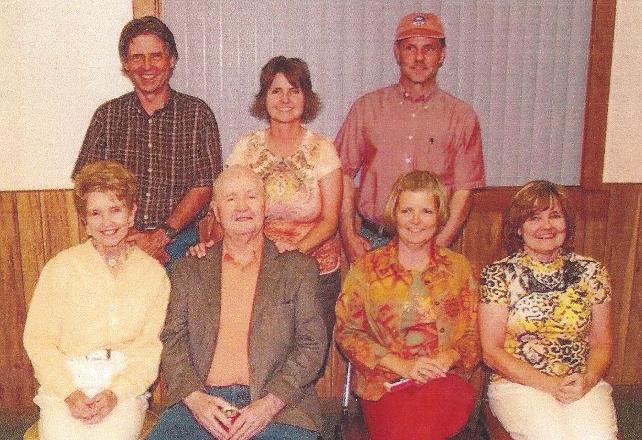
Bill Bailey, Rachel Bailey Boyer, Dan Bailey
Jeannine and Gene Bailey, Barbara Bailey Marton and Becky Bailey Sabado
2009
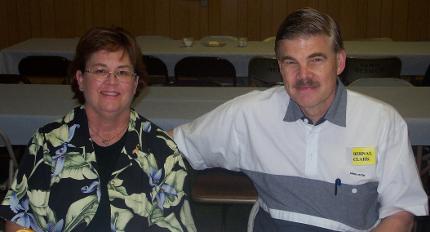
Diane and Burnill Clark
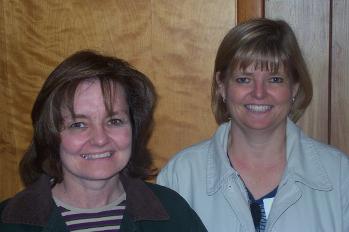
Becky Bailey Sabado and her sister Barbara Bailey Marton
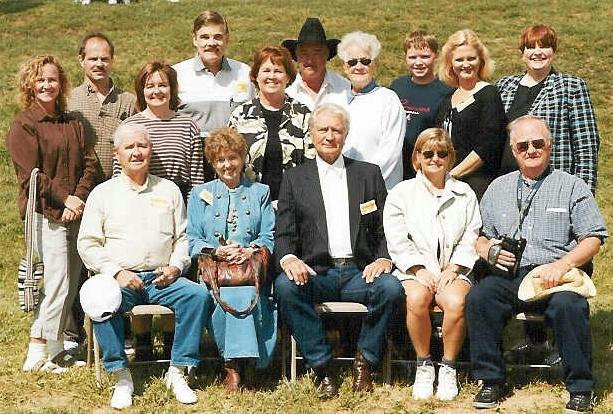
The Bailey Family at the 2001 Hamilton Family Reunion
Back - Joyce Sinclair Maes, Dan Bailey, Becky Bailey Sabado, Burnill and Diane Oswald Bailey, Donny Bailey, Shirley Sinclair, Matt, Bridget Bailey Yarbrough, Maria Bailey
Front- Gene and Jeannine Bailey, Hugh Bailey, Barbara Bailey, Richard Sinclair
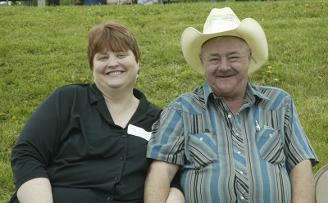
Marie and Donny Bailey
were great supporters of the Hamilton Family Reunions
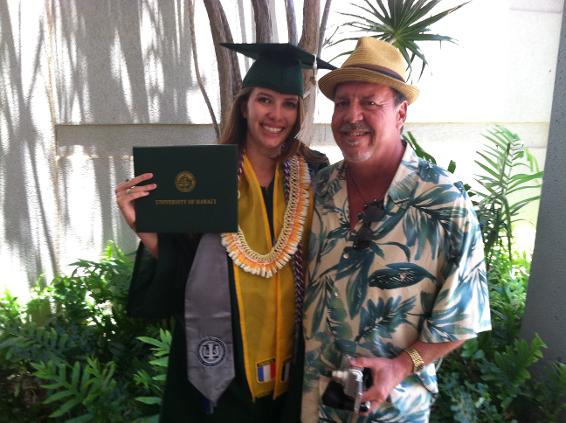
Matt is the son of Delmore and Elaine Bailey
The Bailey Family by Richard Sinclair
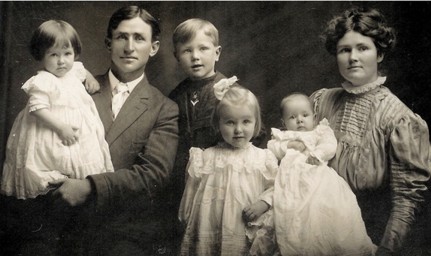
My Grandparents moved from a farm in Elmo, Missouri by Immigrant train to a 360 acre Colorado homestead in 1910. They transported all of their belongings, farm animals, farm equipment by immigrant train to Keota, Colorado then by wagon to the homestead about seven miles by wagon trail.
My mother was two years old when her parents with her siblings Edd, Pauline and Lydetta began this new adventure in the settlement of the west.
Grandmother Bailey visited our home in Denver and at our dinner table gave us a complete description of their relocation to Colorado.
It was fascinating and as I recall it went as follows:
She and her husband Larkin A Bailey were happily married with four children Edd, Pauline, Lydetta and my mother Flora.
They were farming land owned by her father George Washington Hamilton. The Homestead Act of 1862 was enacted during the Lincoln presidency to open up the settlement of the West. In 1910 much of the West had been settled except for the grasslands near Keota, Colorado. Between 1905 thru 1910 the grasslands had received much rain and the federal homestead claims around Keota were booming.
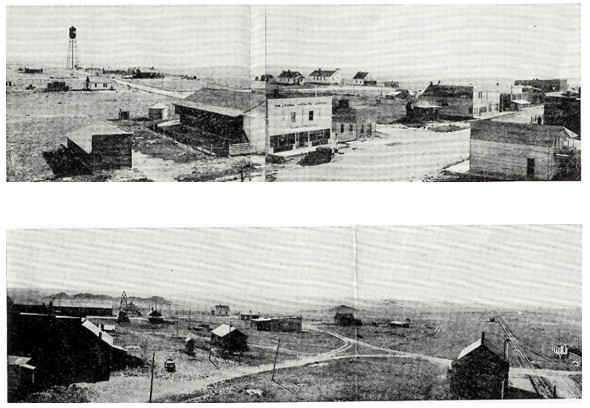
One day in 1910 grandmother’s father advised her he was going to arrange for an immigrant train to go to Colorado and claim a 360 acre homestead.
He was going to claim a homestead along with a couple of her uncles and he wanted her family to go with him. She was oldest of his second family. They lived on his farm so they agreed to go with him.
They gathered all their belongings, farm tools and equipment, animals, wagons, their four children and loaded them on the immigrant train her father had arranged. The trip was a three day journey to Keota, Colorado.
Her father and his brothers had the claims already staked. They loaded their belongings and children on wagons and proceeded on a wagon trail to the homestead claim about seven miles north east of Keota.
Their first job was to pitch a tent for protection from the weather. Next, a water well, erect a wind mill, build a barn and fences for their animals. Then, they would build a home to live in.
One day, after he had put up a tent to protect them from the weather and provided meager food and water for the family, Grandfather Bailey hitched his mules to a wagon and told grandmother he would leave before dawn for Keota to get the lumber to build a barn.
He left the next day and grandmother was alone with three young children waiting for his return. He had not returned by sunset which was his plan and darkness caused her concern. She fretted until after midnight when he returned with the wagon and the barn lumber.
He had a story that ended up on the front page of the Keota Newspaper. (We found a copy of this newspaper behind a picture of Lincoln signing the Emancipation Proclamation while we were helping her with spring housecleaning of her home in Cheyenne) The headlines were “Bailey is chased home by Cowboys”. Grandfather told her what had happened.
He had an uneventful trip to Keota. He loaded his lumber and was a few miles on his return when a bunch of riders rode up to his wagon. They shouted at him to get out of the country calling him a nester and started firing their pistols in the air. This caused the mules to run off and his lumber was scattered all over the place. He had to reload the lumber after the riders rode off causing him to be delayed. They were concerned about this threat but decided to ignore it and continued to build their homestead.
They completed the barn and home and started farming. It was not the fertile farm they had left in Missouri and they found it difficult to grow anything that would support their growing family.
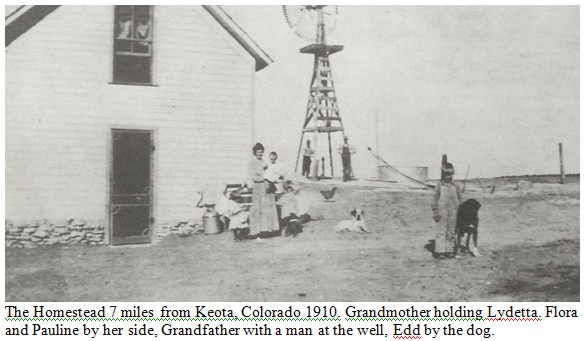
Pawnee National Grassland History records the following;
“Homesteaders continued to migrate in greater numbers during the next few years. Keota, boomed as did Grover, Briggsdale, Sligo, and Hereford. (Shirley’s mother and her father established a homestead near Hereford)
The boom peaked between 1914 and 1918 until much of the land was plowed and many of the large stockman were forced out of the area.
In 1918 Keota’s population peaked around 140. All was going well until an influenza epidemic struck and many died. At the same time drought and hail took the crops and the homesteaders source of income was gone. Everyone started to leave the area.”
Grandfather Bailey and Edd went to Cheyenne in 1922 and obtained jobs with the UPRR. After more than a year working in Cheyenne they decided move to there. Grandmother Bailey and their children remained on the homestead until 1924, when they moved into a home near 19th street and Seymore Avenue in Cheyenne. Their family had grown with the births of Weldon, Ellis and James, Burt and Russell. The remaining children of the family Helen, Delmore and Gene were born in Cheyenne. The homestead was vacant from 1924 until 1927 when Edd and Mabel married and moved to the homestead for a short time. They returned to the UPRR where he retired as its President in 1976.
The family decided to sell the homestead, livestock and machinery, when they bought their final family home in Cheyenne at 600 East 17th Street.
Every summer while I attended high school in Cheyenne I would make a trip to the homestead with some of my uncles and their families. The home was gone but the barn remained. We would sleep overnight in the barn hayloft.
I began to realize and respect the resolve and persistence of my grandparents. They refused to surrender to adversity and the homestead is the only proof I need to know ‘you can do anything you set your mind to.’
It is amazing they created a home here and continued the growth of their wonderful family. They are a prime example of the American pioneers that settled the West.
BAILEY FAMILY
Larkin Anderson Bailey married Iola Matilda Hamilton in Missouri. They had twelve children Edd, Pauline, Flora, Lydetta, Weldon, Ellis, James, Burt, Russell, Helen, Delmore and Gene. Grandfather worked at the UPRR until his death in 1947. He did not enjoy a retirement and worked all his life. He enjoyed being the patriarch of the Bailey Family. Grandmother Bailey was the matriarch and everyone loved and respected her. She loved, cared and comforted everyone in the family until her passing in 1968.
Edd H Bailey married Mabel Parker his high school sweetheart. They had two children Hugh and Laura. He worked for the UPRR most of his life and retired as UPRR President in 1976. He passed away in 1988.
Pauline Bailey married Charles Becker and lived in Gill, Colorado most of her life. She moved to Cheyenne after Charles passed away in 1976.
Weldon Colorado Bailey married Lucille and they had two children Jeff and Jennifer. He owned a ranch at the state line south of Cheyenne and worked at the UPRR baggage room most of his life. He passed away in 1980.
Flora Matilda Bailey graduated from Cheyenne High School in 1926. She earned a Wyoming Teachers Certificate and taught school in Cheyenne. She married Fred Sinclair and had two children, Richard Eugene, and William Larkin. The marriage ended in divorce in 1944. She worked as a sales lady most of her life and was a devoted mother to her children. She married again to Fred M Schmoker in 1952. They lived in Cheyenne until he retired as Cheyenne Chief of Police when they moved to Fort Collins. She passed away from Alzheimers disease in 1986.
Lydetta Bailey married Harry Oswald. They had two children Little Harry and Diane. Little Harry passed away at two years from sleeping sickness. Harry served in the United States Army during WWII. Harry delivered milk for the Plains dairy much of his life. Lydetta worked as a secretary part of her life. She lived near her daughter during her final years. She passed away in 2000.
Ellis Bailey married Jenny. They had two children Julie Ann and Jimmy. Jenny passed away in 1945 after a brief illness. Ellis endured this tragic lost and subsequently met Lake. They married and raised his two children. They were blessed with a son John. Ellis delivered Plains Dairy and Dairy Gold milk to Cheyenne families for forty one years. He retired in 1977 and passed away in 1985.
James Bailey married Jean. They had two children Lydetta and Donnie. He served in the Navy during WWII. His marriage to Jean ended in divorce during WWII, He married Betty. They had three children Larkin, Denise and Teddy Ann. He served in the United States Navy during WWII. He worked at the UPRR most of his life until illness caused him speech and physical impairment. He lived the remainder of his life operating his apartment house in Cheyenne. He passed away in 1991.
Elvin Albert (Burt) Bailey married Alberta. They had four children Bobby, Tommy, Andy and Douglas. He worked at the UPRR all of his life. He served in the United States Navy during WWII. He passed away in 1966.
Russell L Bailey was the first family member to graduate from college. Russ worked to supplement the family income to make it possible for him to attend the U of W. He delivered ice to his mother’s icebox before she acquired a refrigerator. During the 1930’s and WWII many people kept their food with iceboxes because they could not afford refrigerators. Russell worked for an ice company that delivered ice to Cheyenne homes. He also had a paper route delivering papers to Cheyenne homes. Gene, Del, Bill and I would some times help him deliver papers and ice. Russell graduated from Cheyenne High School and entered the U of W in 1939. He participated in school activities and became president of the Kappa Sigma Fraternity. He took ROTC and was awarded an officers commission when he graduated from U of W in 1943. He was immediately called to serve as an infantry officer in WWII and sent to Camp Roberts, California where he married Teddy Ann Story. They enjoyed married life until early 1944 when he was sent to England to be an infantry officer in the D-Day invasion of France at Normandy. He survived the fighting until June 21, 1944 when he was killed in action. Teddy was pregnant with his son with Russell when he was sent to England. Their son was born after his death.
Helen Bailey married Max Hollis. They had one son, Max, and lived in Cheyenne, Laramie and Douglas. Max was an auto mechanic. Helen passed away of Cancer.
Delmore Wesley Bailey married Elaine Cash and had one son, Matt. Del served in the United States Navy in the South Pacific during WWII. He worked for a Cheyenne Architectural Firm and attended the U of W. He passed the Wyoming Architect Examination and worked in Omaha and Los Angeles as an Architect. He passed away of a heart attack.
Eugene Richard Bailey married Jeannine Slagle in 1949. They had five children Becky, Bill, Dan, Barbara, and Rachel. Gene served in the United States Army and attended the U of W. Then, established a Brokerage Insurance business in Cheyenne he still operates with Jeannine and their son Dan. Their daughter Becky has published a Bailey Family Newsletter for years that I have enjoyed so much. She has helped preserve our family heritage. Thank you Becky.
